
Hekh hosted “Imagings Gatherings: Collectives and Beyond in Kashmir” on 21st February, 2026, with Salman B. Baba, Khursheed Ahmad, Saqib Butt and Sandip K. Luis.
Through presentations, and performances- the conversations reflect on the existing independent artistic intervention in Kashmir and how their existence becomes relevant in current times. They unpack the ‘trojanness’ of such interventions, moving into people come together under conditions of precarity, surveillance, infrastructural voids and fragmentation- and how such coming-together can present a possible framework for collectives that is sustainable over time.
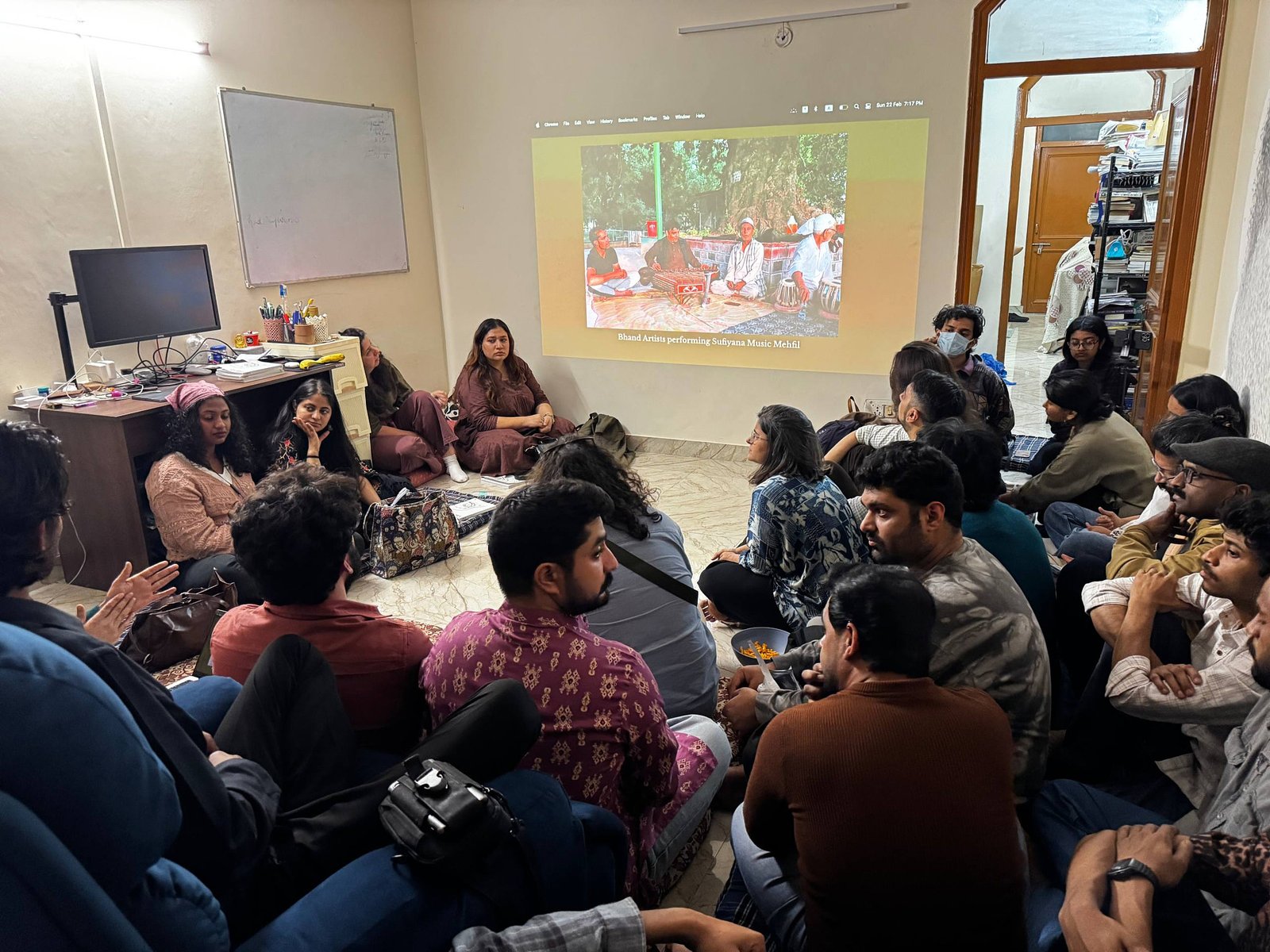

Saqib Butt tracing a wider history of institutional critique at the arts department in University of Kashmir. The presentation detailed how the department has gradually built a critical methodology to rethink its own tenets, while also providing space for students and young artists to think, critique, and reimagine their socio-political selves.
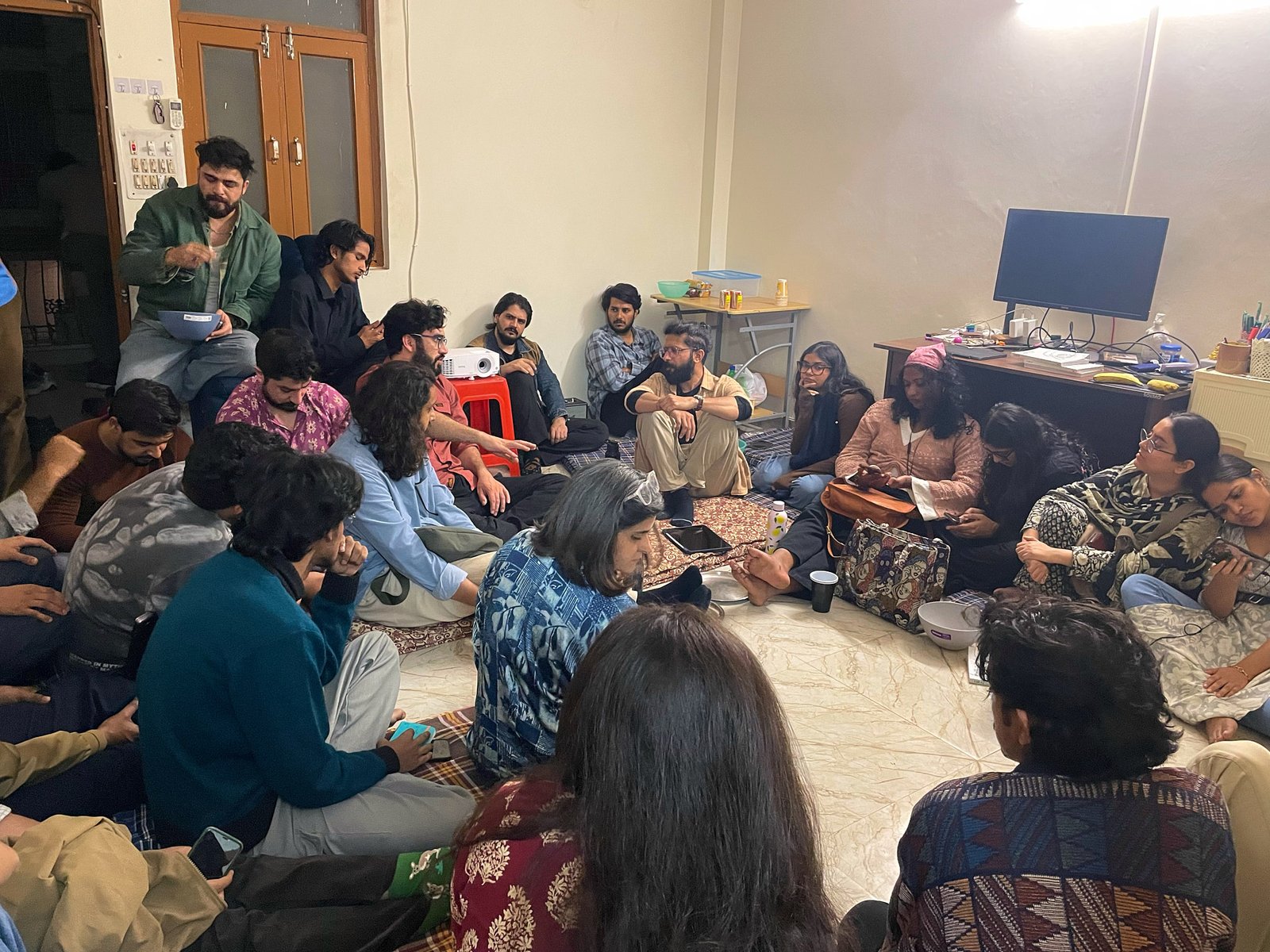
Salman Bashir Baba introducing the history of Yusmarg collective, based in Kashmir; its stakes, the conditions, and possibilities of collectivising in politically tumultuous landscapes. He extended his contribution from Call #2, bringing a wider history of collective gestures within the pedagogical and artistic legacies in Kashmir- exploring trojanness as a critical method to navigate censorship and supression of dissent.
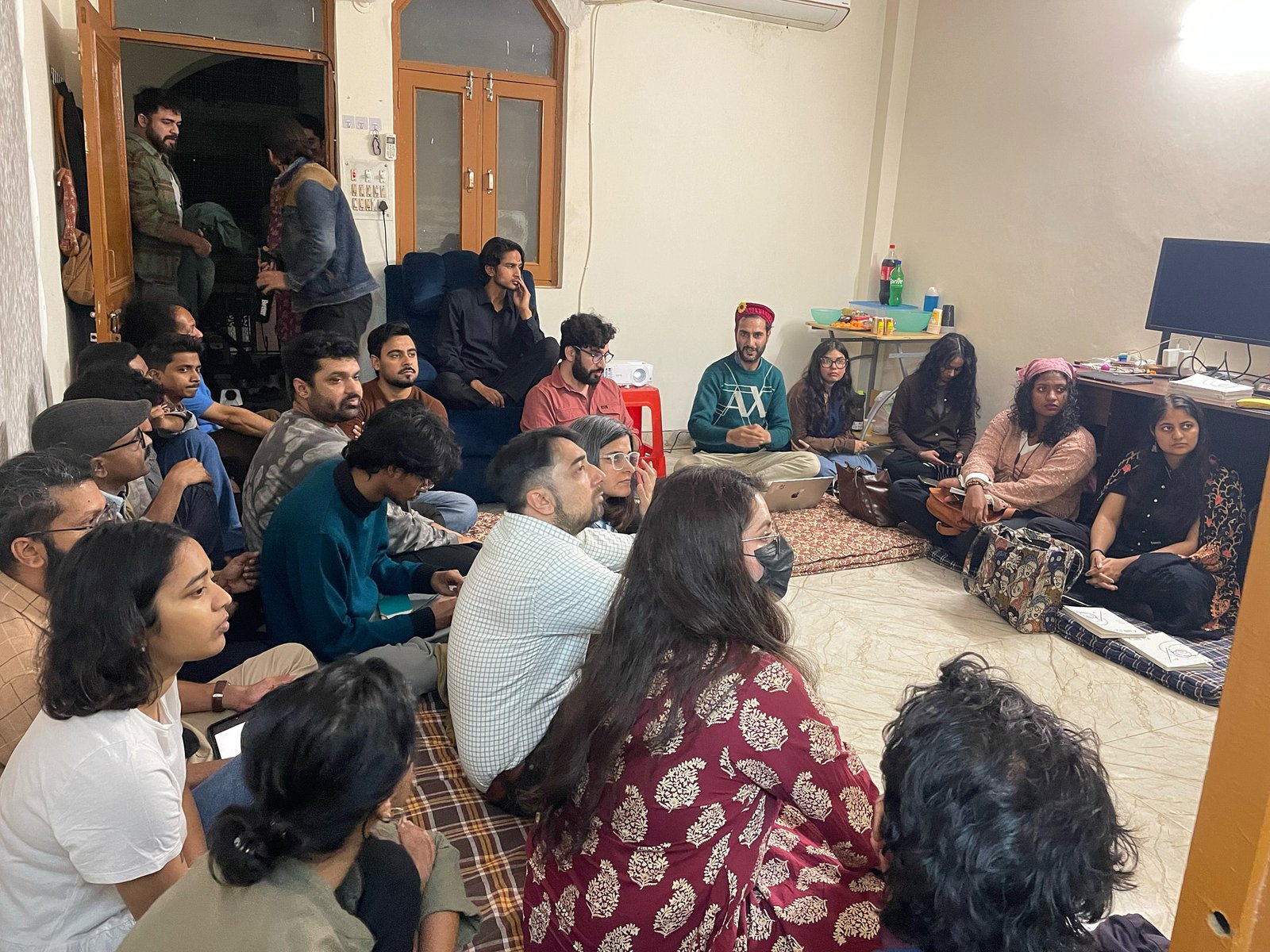
Khursheed Ahmad talking about Bhand Pather, a folk form native to Kashmir which is currently endangered. Bhand Pather blends drama, dance, music, and satire to reflect the region’s traditions, resilience, and communal harmony. The word Bhand refers to a jester, while Pather means a performance or play. Traditionally, the stories revolve around mythological, historical or social themes, blending spirituality with entertainment. Khursheed co-founded the Shikargah collective, actively engaging with members of the Bhand community, often inviting them to collaborate in performances or participate in readings of historical epics, keeping the folk tradition alive in evolving ways.
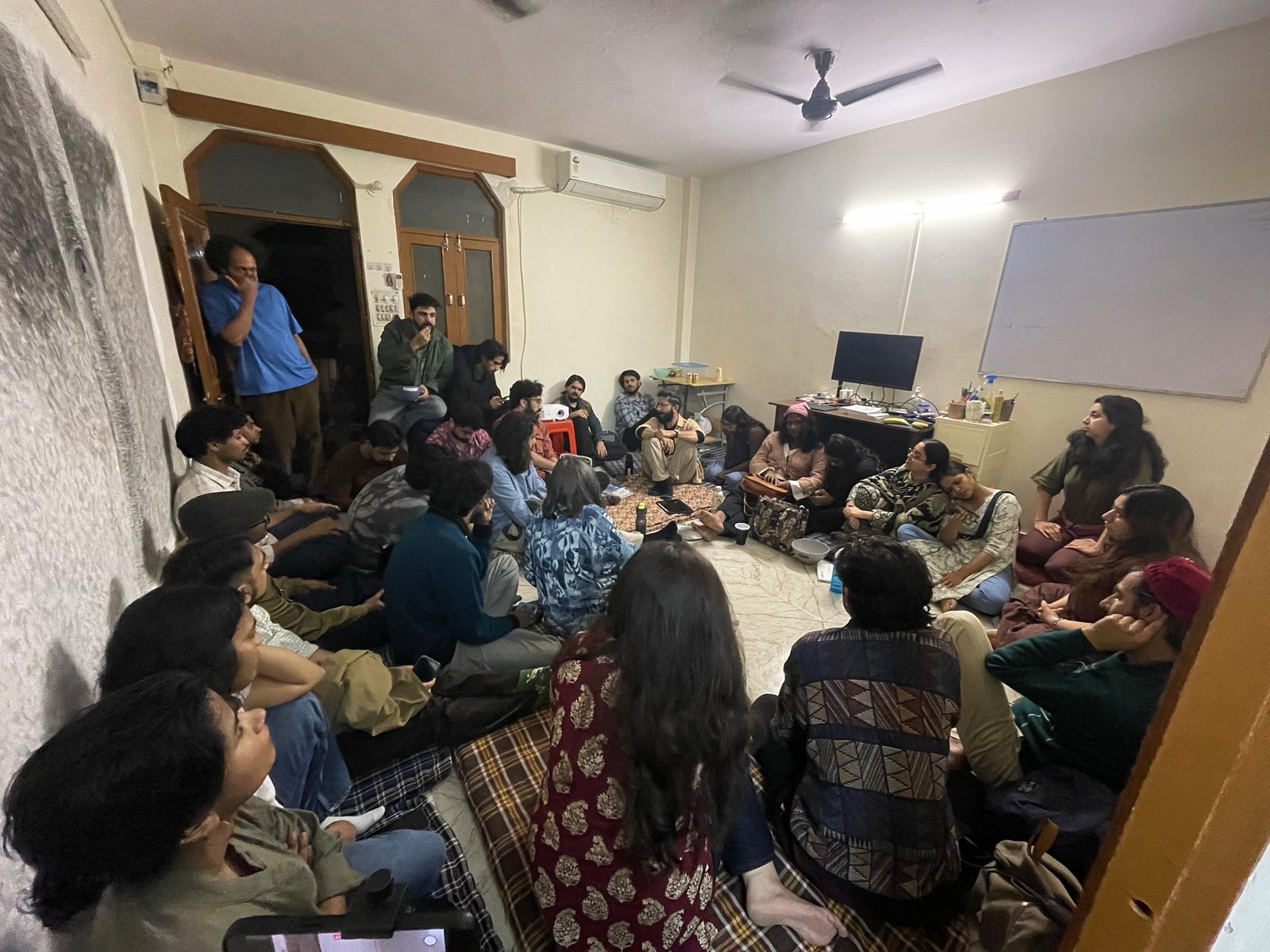
Sandip K Luis talking of artistic manifestos, and how history sees, marks, and comprehends gestures of collectivisation. Through his tracing of manifestos, Sandip opened a discussion around institutionalisation, rethinking what it means to have verticals, hierarchies, and outright declarations of intent, in regimes which actively isolate and hunt down said declarations. The discussion further explored the possibilities, and transgressive nature of the artistic gesture in such circumstances.
Excerpt from Saqib's presentation.
About the Collaborators:
Sandip K. Luis is an Assistant Professor in the Department of Art History & Art Appreciation at Jamia Millia Islamia, New Delhi. He received his Ph.D. and M.Phil. in Visual Studies from the School of Arts and Aesthetics at Jawaharlal Nehru University, New Delhi (2019). His areas of research and publication include theories of the avant-garde and Third World modernism, biennials, and the historiography of global contemporary art.
Saqib Mohammad Butt is an interdisciplinary artist whose practice navigates the interstices of memory, political geography, and embodiment. Born in Srinagar, Kashmir, and currently based in New Delhi, he holds a Master’s degree in Applied Art and a PhD in Visual Arts, and teaches in the Department of Painting at Jamia Millia Islamia, New Delhi.
Khursheed Ahmad, born into a family of folk artists called ‘Bhand’ in Kashmir, who over the centuries have played different roles in public theatrical spaces. His interests in art practice lie in multiple disciplines i.e. performance, text, sound, drawing, found object, and photography. He has pursued a bachelor’s degree (painting) from Kashmir University and completed a master’s degree in Visual Arts from Ambedkar University Delhi in 2018.
Salman B Baba is a visual artist who lives and works in Kashmir. He has a MA in Visual Arts from Ambedkar University and BFA in Applied Arts from Jamia Millia Islamia, ND. His practice responds to the discourses surrounding Kashmiri landscape and subjecthood which has led him to explore ideas around sovereign power politics.